
LE SSERAFIM's 'SPAGHETTI (feat. j-hope)': When K-Pop Remembered How to Have Fun While Serving Receipts
I'm going to be honest: when I first saw "SPAGHETTI" as a track title, I had questions. Food-themed K-pop songs walk a very thin line between quirky brilliance and cringe territory. But then I saw j-hope's name attached, hit play, and realized—oh, they're not just making a song about pasta. They're serving an entire five-course meal with receipts for dessert.
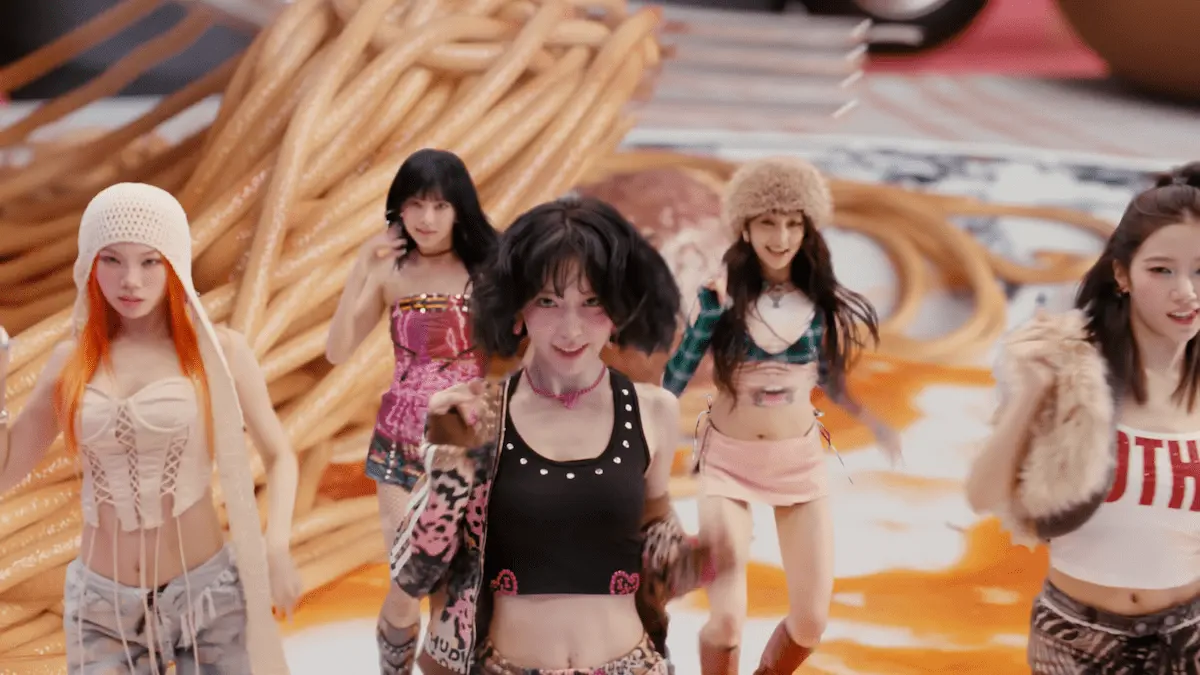
Source: Official LE SSERAFIM YouTube (© SOURCE MUSIC)
Table of Contents
- Quick Summary: The Vibe Check
- Credits & Release Context
- First Reaction: Wait, This Actually Works?
- The j-hope Factor: From Chicken Noodle Soup to SPAGHETTI
- The Hidden Message: It's Not Really About Food
- Visual Breakdown: Color, Chaos, and Confidence
- Styling Spotlight: Why Everyone's Talking About Sakura's Hair
- The "Fun K-Pop" Discourse: What This Comeback Represents
- Collaboration Chemistry: Why This Pairing Makes Sense
- Fan Perspective: ARMY Meets FEARNOT
- Frequently Asked Questions (Q&A)
- Sources & Technical Data
Quick Summary: The Vibe Check
SPAGHETTI is LE SSERAFIM’s playful middle finger to their critics, dressed up as a fun food song with j-hope adding the perfect amount of swagger. The MV is colorful chaos with drag queens, vibrant sets, and styling that actually serves the concept. It’s the kind of track that sounds silly until you read the lyrics and realize they’re basically saying “you claim to hate us but you keep coming back for more.” j-hope’s verse elevates the entire production, proving once again that he understands assignment on every collaboration he touches.
Credits & Release Context
Chart Performance Highlights:
- #17 US iTunes (highest for 4th gen group at release)
- #1 iTunes in 55 countries
- #5 peak on Melon (highest since launch)
- 19M+ Spotify streams in first week
- #1 Trending in Korea
First Reaction: Wait, This Actually Works?
Let me walk you through my viewing experience because it mirrors what I saw across hundreds of reactions: skepticism followed by surprised delight.
The opening immediately signals LE SSERAFIM’s confident, slightly chaotic energy—they’re clearly not taking themselves too seriously here. Then the chorus hits with its repetitive “eat it up, eat it, eat it up” hook, and I’m thinking… okay, this is either going to be brilliantly catchy or annoyingly repetitive. There’s no middle ground with hooks this bold.
What saved it? The production. The track doesn’t sound cheap or thrown together. There’s layering, there’s texture, there’s intentional chaos that feels controlled rather than messy. And crucially, the members sell it—they commit fully to the bit without winking at the camera. That confidence makes the absurdity work.
But here’s where it got interesting for me: as I replayed the track and watched reactions flooding in, I started catching the actual lyrical content beyond the surface food metaphor. Lines about people claiming to hate something while secretly consuming it, references to being stuck between teeth (metaphorically stuck in your head), the “you better stop lying” callout. This wasn’t just a quirky food song. This was a carefully constructed response to their critics wrapped in enough playfulness that it doesn’t come across as defensive or bitter.
That’s sophisticated songwriting masquerading as silly pop, and I respect that immensely.
The j-hope Factor: From Chicken Noodle Soup to SPAGHETTI
The j-hope feature generated more comments than almost any other element, and for good reason—this man has a gift for elevating tracks he touches without overshadowing the primary artists.
The Noodle Continuum
First, we need to address the elephant (or noodle) in the room: the immediate connection fans made between “Chicken Noodle Soup” and “SPAGHETTI.” One commenter perfectly captured it: “j-hope be appearing at any songs with Noodles in it.” That observation got 25,000 likes because it’s both funny and true—there’s now an unofficial j-hope noodle song lineage, and honestly? I’m here for it.
But beyond the meme, the parallel matters thematically. “Chicken Noodle Soup” was about comfort, nostalgia, and cross-cultural connection. “SPAGHETTI” extends that metaphor into something more pointed—comfort food that becomes an addiction, something you consume even when you claim not to like it. j-hope understands food metaphors in music, clearly.
The Verse That Completed the Song
j-hope’s entrance at 1:27 through 1:52 shifts the entire energy. Multiple reactions specifically timestamp this moment, noting how his delivery adds weight without disrupting flow. His verse isn’t trying to dominate—it’s serving the song’s purpose while showcasing his technical skill.
What makes it work: his flow matches LE SSERAFIM’s established rhythm while adding complexity. He’s not doing a completely different style that feels grafted on. He’s enhancing what’s already there, which is the mark of a feature artist who actually respects the primary group’s vision.
The Korean lyrics in his section lean into wordplay and cultural references that bilingual listeners caught immediately, while the delivery remains accessible to international audiences. That balance is difficult to achieve, and it’s why his features consistently satisfy both domestic and global fanbases.
Specific reactions highlighted his “smooth” delivery, how he “ate” the performance, and particularly that moment at 1:33 where his presence becomes undeniable. The consensus across languages was remarkably unified: this verse elevated an already strong track into something memorable.
The Visual Presence
Even in silhouette form before his full appearance, j-hope’s presence reads immediately. One comment noted “even his silhouette screams handsome and swag,” which sounds like hyperbole until you watch and realize… yeah, actually. The way he’s framed, styled, and integrated into the MV’s chaotic aesthetic suggests careful coordination with LE SSERAFIM’s creative team rather than a rushed “let’s throw in a guest appearance” approach.
His styling—casual but clearly curated, fitting the MV’s color palette without blending in—demonstrates understanding of visual narrative. He’s a guest in their world, and the production makes sure that dynamic is clear while still giving him memorable moments.
The Hidden Message: It’s Not Really About Food
This is where SPAGHETTI reveals its actual intelligence, and why I think it’ll age better than initial reactions might suggest.
The Hater Metaphor Decoded
Multiple comments from fans who “understood the meaning” expressed how the song “hits different” with context. Let me break down what they’re catching—and what I caught after digging deeper into the lyrics:
Surface level: Fun song about eating spaghetti, addictive flavors, chef’s choice, bon appétit.
Actual meaning: You (critics/haters) claim to dislike us, but you keep consuming our content. You’re obsessed. You “eat it up” despite saying you hate it. The spaghetti stuck in your teeth is LE SSERAFIM stuck in your head.
The genius is in how they deliver this. There’s no anger, no defensiveness. It’s playful, almost pitying—”you better stop lying” delivered with a smile. That’s a mature response to criticism that younger groups often struggle with. Instead of engaging seriously with bad faith critique, they’re essentially saying “we see you hate-watching, and honestly? That still counts as engagement.”
Key Lyrical Moments That Land Different With Context
The “guilty pleasure never killed nobody” line takes on new weight when you realize it’s about people who secretly enjoy LE SSERAFIM’s music while publicly criticizing them. The shame is theirs, not the group’s.
“You don’t need to think too much” becomes a dismissal of overthinking critics who analyze everything looking for flaws instead of just experiencing the music.
“Bad b** in between your teeth”—they’re literally calling themselves that while acknowledging they’re the thing critics can’t get rid of, constantly picking at but unable to fully remove from their consciousness.
The two curse words in the track (unusual for K-pop) aren’t gratuitous—they’re punctuation marks emphasizing the group’s confidence and unwillingness to be constrained by expectations of idol propriety.
j-hope’s verse adds another layer with lines about being “the main character in your kind of drama”—acknowledging that haters have made LE SSERAFIM central to their discourse, giving them exactly the attention they claim to withhold.
Why This Approach Works
LE SSERAFIM has faced more vocal criticism than many 4th gen groups, particularly around vocal ability controversies. Instead of addressing critics directly or pretending they don’t exist, they’ve created a song that acknowledges the hate while completely refusing to be diminished by it. That’s power move territory.
The food metaphor provides enough plausible deniability that casual listeners can enjoy it as a fun track while fans and critics both understand the subtext. That dual-layer accessibility is smart commercial songwriting.
One fan perfectly articulated what I was thinking: “it may be a fun song but has deep meaning, lyrics may talk about spaghetti but its about moving forward despite all the bad things they hear.” That’s exactly the emotional intelligence this track demonstrates.
Visual Breakdown: Color, Chaos, and Confidence
The MV’s aesthetic is deliberate overstimulation—vibrant colors, constant movement, maximalist set design that feels both expensive and intentionally garish.
The Color Palette as Statement
The dominant use of bright reds, oranges, and yellows (spaghetti/tomato sauce colors, obviously) creates visual cohesion while allowing individual members to pop through contrasting styling. It’s not subtle, but subtlety clearly wasn’t the goal. This is a “look at us, we’re impossible to ignore” visual strategy.
The lighting shifts between warm (kitchen/restaurant scenes) and cool (some of the dance sequences) create rhythm that prevents visual fatigue over the three-minute runtime. That’s technical craft serving creative vision—the cinematography team understood that this much visual information needed breathing room through lighting variation.
The Drag Queen Inclusion
The presence of drag performers (specifically credited: NANA YOUNGRONG KIM, KYAM, RINGRING) is a significant creative choice that adds layers to the MV’s meaning. Drag culture has long embraced the concept of “serving” both food metaphorically (serving looks) and the performative excess that SPAGHETTI embodies.
Their inclusion signals LE SSERAFIM’s awareness of and connection to queer performance aesthetics, which have influenced K-pop increasingly in recent years. It’s not tokenistic—they’re integrated into the visual narrative naturally, adding to the MV’s celebratory chaos rather than feeling like a checkbox diversity moment.
The drag performers appear throughout the MV in ways that enhance the “maximalist kitchen” concept—they’re part of the cooking crew, the dining experience, the entire theatrical production. That integration matters. It says this isn’t just visual decoration; it’s acknowledging the cultural lineage of bold, unapologetic performance.
Set Design: Maximalism as Message
The kitchen and dining spaces are exaggerated to the point of surrealism—oversized props, theatrical lighting, everything just slightly too much. That’s intentional. The excess mirrors the song’s message: we’re too much for you to ignore, too much for you to forget, impossible to consume in moderation.
One particularly clever visual motif: the recurring shots of food preparation and serving. They’re literally showing you the “cooking” process (the metaphor haters were already using against them—”they’re cooked”) while reframing it as them being the chefs in control of the recipe.
The Ratatouille reference at 2:38 (noted by multiple viewers) adds another layer—the Pixar film about a rat who becomes a great chef despite everyone saying it’s impossible. That’s… not subtle symbolism, and I appreciate the boldness of it.
Styling Spotlight: Why Everyone’s Talking About Sakura’s Hair
The styling in SPAGHETTI generated significant positive reaction, with specific members’ looks becoming talking points that drove repeat views.
Sakura’s Short Curly Hair: The “Grand Victory”
Multiple Japanese comments specifically called out Sakura’s short curly hair as “大優勝” (grand victory/complete win), and watching the MV, it’s clear why. This styling is a departure from her typical look—more playful, more textured, more “I’m having fun and don’t care what you think.”
The curls add volume and movement that photographs well in the MV’s dynamic sequences. Every head turn creates visual interest. And crucially, it reads as a confident styling choice rather than a safe one. That willingness to try something different resonates with fans who appreciate when idols are allowed to experiment beyond their established image.
Her increased presence throughout the MV, combined with styling that enhances rather than fights her natural features, created a “this is Sakura’s era” sentiment across reactions. One fan beautifully captured it: “hearing Sakura’s voice so much and seeing her at center so much made me incredibly happy.”
The first chorus center position for Sakura—specifically mentioned by fans—combined with this striking hair transformation created a perfect storm of “finally getting her moment” energy that longtime supporters had been waiting for.
Chaewon’s Neon/Orange Hair
Chaewon’s bright hair color serves as a visual anchor throughout the MV—you can track her position in group shots instantly. That’s functional styling that serves choreography showcasing. When formations shift quickly, having one member with highly distinctive coloring helps viewers orient themselves.
But beyond function, the color choice aligns with the MV’s warm palette while pushing into almost artificial brightness. It’s attention-grabbing without feeling out of place, which is the balance idol hair color needs to achieve.
Multiple comments praised Chaewon’s voice specifically in this track, noting how her distinctive tone cuts through the mix. The styling amplifies that sonic distinctiveness with visual distinctiveness—you hear her and see her simultaneously, reinforcing her individual brand within the group context.
Kazuha’s Swag Concept Evolution
Comments specifically noted Kazuha thriving in the “baddie/swag concept,” calling it a “cool switch up” from her previous elegant/ballet-influenced image. The styling team dressed her to emphasize confidence and attitude rather than grace, and the result showcases her range.
This matters for her individual brand development. Being typecast as “the elegant one” limits commercial opportunities. Proving she can embody completely different energies expands her marketability and keeps her interesting to watch across comebacks.
Her styling in SPAGHETTI leans into streetwear influences with bold accessories and looser silhouettes that allow for powerful movement. It’s a calculated risk that paid off—she reads as comfortable and natural in this concept rather than forced into something that doesn’t fit.
Yunjin and Eunchae: Vocal Presence and Visual Balance
Yunjin’s “hip tone” (as one commenter described it) gets complemented by styling that emphasizes her height and stage presence. She’s often positioned to anchor formations, and her wardrobe choices—slightly more structured than some members—reinforce that leadership visual.
Eunchae, as the youngest, could easily get lost in a concept this bold, but her styling walks the line between age-appropriate and concept-appropriate effectively. The “eat it up, eat it, eat it” center moment specifically mentioned by fans showcases how styling and positioning combine to give even the youngest member her spotlight.
Overall Styling Coherence
The wardrobe doesn’t match exactly across members, but it coordinates—similar color families, comparable levels of styling detail, accessories that complement without overwhelming. Each member looks like an individual while clearly belonging to the same group.
That balance is harder than it looks. Too matchy-matchy reads as manufactured and restrictive. Too disparate feels disorganized. SPAGHETTI’s styling team nailed the sweet spot, earning the “deserves a raise” comments that flooded reactions.
The “Fun K-Pop” Discourse: What This Comeback Represents
One of the most interesting response patterns was fans expressing relief and joy that “fun K-pop is back.” That sentiment deserves unpacking because it reveals industry fatigue that SPAGHETTI is addressing.
The 2000s Collaboration Nostalgia
A highly-liked comment noted: “I missed those random artist collaboration we used to get back in 2000’s. This has those vibes and I’m all here for it.” That’s referencing an era when K-pop featured more unexpected pairings, more willingness to experiment with concepts that were purely fun rather than strategic.
SPAGHETTI as a collaboration feels spontaneous even though it obviously isn’t—there’s meticulous planning behind making something appear effortless. But the vibe reads as “j-hope and LE SSERAFIM wanted to make something fun together” rather than “labels calculated this collaboration would optimize both artists’ Q4 performance metrics.”
That perceived authenticity matters enormously to fans who feel increasingly aware of and exhausted by obvious commercial calculation in modern K-pop. When someone says “this is what LESSERAFIM is made for,” they’re expressing relief that a group is being allowed to do what suits them rather than being forced into whatever’s trending.
The Serious Music Fatigue
K-pop has trended heavily toward serious, intense concepts over the past few years—dystopian storylines, dark aesthetics, message music addressing mental health and societal pressure. All valuable, but also relentless. There’s been a market overcorrection toward Meaningful Art that sometimes forgets music can just be… enjoyable.
SPAGHETTI is deeply unserious on its surface while still containing layers for people who want them. That balance gives different audience segments what they need—casual listeners get a catchy, colorful bop, while invested fans get the clever subtext about haters. Everyone wins.
The comment “idk abt yall but this is the real fun k-pop we were begging to come back” captured something I’ve been feeling watching K-pop evolve: the loss of permission to simply enjoy things without them needing to be profound or tragic or revolutionary.
What “Fun K-Pop” Actually Means
It’s not about silliness for its own sake. It’s about:
Permission to not be profound - Music that exists to make you feel good rather than make you think hard. SPAGHETTI succeeds because it doesn’t demand you engage with heavy themes, but rewards you if you choose to look deeper.
Visual playfulness - MVs that prioritize aesthetics and enjoyment over narrative coherence. The SPAGHETTI MV doesn’t tell a linear story, and that’s fine. It’s a vibe, a mood, an experience.
Collaborative joy - Features that feel like artists wanting to work together rather than label obligations. The ease with which j-hope integrates into LE SSERAFIM’s world suggests genuine artistic alignment rather than forced pairing.
Genre flexibility - Not being locked into one sound or concept identity. LE SSERAFIM has gone from “FEARLESS” to “ANTIFRAGILE” to “Eve, Psyche & The Bluebeard’s wife” to now “SPAGHETTI.” That range keeps them interesting rather than predictable.
SPAGHETTI embodies all of these, which is why it’s being positioned (by fans, not labels) as representing something larger than just one comeback. It’s proof that K-pop doesn’t have to choose between “serious art” and “fun entertainment”—it can be both, depending on what the moment calls for.
Collaboration Chemistry: Why This Pairing Makes Sense
On paper, j-hope and LE SSERAFIM might seem like an odd pairing—different generations, different group contexts, different typical musical directions. In practice, it works because of careful consideration of what each brings.
What j-hope Contributes
Credibility: His presence immediately signals “this is musically serious even if conceptually playful.” He doesn’t do throwaway features—his involvement suggests he heard something worth adding to.
Technical skill: His rap technique is undeniable, providing a standard that elevates the track’s overall perception of quality. Multiple comments specifically praised his “smooth” flow and how his verse “completed” the song.
Cross-fandom appeal: ARMYs will check out anything he’s on, introducing LE SSERAFIM to listeners who might not otherwise engage. Numerous comments from ARMYs stated this was their first K-pop MV beyond BTS, specifically because of j-hope’s feature.
Experience: He’s been navigating K-pop at the highest level for over a decade. That wisdom shows in how he integrates into someone else’s track without overwhelming it. As one reaction noted, “Hoseok has never had a bad verse in his entire career. he never misses!”
Cultural bridge: His ability to deliver Korean wordplay while maintaining international accessibility helps the track work across markets. That’s not a skill every artist has.
What LE SSERAFIM Contributes
Fresh energy: They’re hungry in ways established artists sometimes aren’t. That drive comes through in their performance intensity throughout the MV.
Conceptual boldness: They’ve built a brand around being “fearless” and backing it up with increasingly confident creative choices. That brand allows for experimental tracks like this. As fans noted, “only le sserafim could pull off this concept.”
Vocal color: The group’s tonal variety (from Chaewon’s distinctive tone to Yunjin’s richness to Sakura’s improved delivery) creates interesting texture that prevents the track from feeling monotonous despite its repetitive hook.
Youth perspective: They’re speaking to and from a different generational experience than j-hope, and that contrast creates creative tension that energizes the collaboration.
Performance commitment: The way they sell the concept—fully committing to the absurdity without ironic distance—makes the entire package work. You believe they’re having fun, which makes it fun to watch.
The Chemistry Proof
The best evidence of genuine chemistry is in how comfortable the final product feels. There’s no awkward “and now here’s the mandatory feature verse” energy. j-hope’s section flows naturally from what precedes it and into what follows. The transitions are smooth. The energy is consistent.
Multiple reactions noted the feature felt “perfect” for the song—not just good, but specifically right for this track. That’s the result of either excellent creative planning or genuine artistic alignment. Probably both.
The fact that both fanbases embraced the collaboration rather than competing over it suggests the chemistry translated to the audience. When fans say things like “this collab is gonna be hit” or “collab of the year,” they’re not just being supportive—they’re recognizing that the sum exceeded its parts.
Fan Perspective: ARMY Meets FEARNOT
The collaboration created a fascinating cross-fandom dynamic that played out in real-time across comments sections, and honestly, it’s been one of the most positive fandom interactions I’ve witnessed in recent K-pop.
The Unified Streaming Push
Comments repeatedly called for ARMYs and FEARNOTs to work together for chart goals, streaming targets, and award show objectives. That coordination represents a shift from typical fandom competition—groups aren’t fighting over who gets #1, they’re combining forces to ensure both artists succeed.
The progression of goal-setting in comments tells its own story: “Let’s go for 10 million in 24 hours” became “Now let’s go for 15M” became “Now let’s go for 20M” became “Let’s hit 25M.” That’s collaborative momentum building rather than competitive one-upmanship.
This matters strategically. K-pop success increasingly depends on fandom coordination and dedication rather than just casual listening. Two major fandoms cooperating gives both artists advantages they wouldn’t have independently.
The Introduction Factor
Numerous ARMYs commented this was their first time watching a K-pop MV beyond BTS specifically for j-hope’s feature. One memorable comment: “This is the first time I watch a kpop group mv beside BTS for Hobi.” That introduction potential is invaluable for LE SSERAFIM’s growth.
If even a small percentage of those viewers become casual fans, that’s meaningful audience expansion. And the reactions from those first-time viewers were notably positive—many expressed surprise at how much they enjoyed it, suggesting LE SSERAFIM successfully converted skeptics into potential supporters.
Conversely, FEARNOTs expressing gratitude to j-hope and ARMYs for “supporting” LE SSERAFIM creates goodwill that may pay dividends if/when BTS members need similar support for their individual projects. The comment “Big thanks to all the Armies supporting fearnot!” exemplifies that mutual appreciation.
The Respect Dynamic
The comment sections maintained notably respectful tone despite mixing two large fandoms—”thank you for the collaboration” rather than “my fave carried your fave.” That mutual respect isn’t guaranteed in K-pop collaborations and suggests both j-hope and LE SSERAFIM’s teams prepared their fanbases well for this release.
The recurring phrase “they ate it up” (eating metaphors, naturally) applied equally to both j-hope and LE SSERAFIM, with fans acknowledging each party’s contribution rather than engaging in competition about who did more.
When someone asks “How many people are here to support LE SSERAFIM & J-HOPE?” and gets 36,000 likes, that’s evidence of genuine coalition-building rather than forced politeness. Both fanbases feel invested in the success of the whole project, not just their specific artist.
The MAMA 2025 Anticipation
One of the most-liked comments specifically called for a joint LE SSERAFIM and j-hope performance at MAMA 2025, getting over 1,300 likes and generating extensive discussion. That’s fans actively imagining and requesting future collaboration opportunities, which suggests they want this partnership to continue beyond a single track.
The enthusiasm for potential live performances together indicates the collaboration succeeded in creating desire for more content featuring both artists. That’s the holy grail of features—when fans don’t just tolerate the guest artist but actively want to see them work together again.
Frequently Asked Questions (Q&A)
Is SPAGHETTI actually about food, or is there a deeper meaning?
Both! On the surface, it's a playful song using food metaphors for attraction and addiction. The deeper meaning is a clever response to critics—people who claim to dislike LE SSERAFIM but keep consuming their content, unable to get them out of their heads (like spaghetti stuck in your teeth). Lines like "you sneak a bite when I can't see, you better stop lying" directly reference hate-watchers who publicly criticize while privately listening. It's sophisticated songwriting disguised as silly pop.
How does this compare to j-hope's "Chicken Noodle Soup" collaboration?
Fans immediately connected them as part of j-hope's "noodle song" lineage—a joke that got 25,000 likes because it's both funny and observant. Chicken Noodle Soup focused on cultural connection and nostalgia, while SPAGHETTI uses food metaphors for addiction and criticism. Both showcase his ability to elevate collaborations without overshadowing partners. His style adapts to each track's specific needs rather than imposing a single approach, which is why his features consistently satisfy both domestic and global fanbases.
Why is everyone talking about Sakura's hair?
Sakura's short curly hair styling generated massive positive reaction, with Japanese fans calling it a "grand victory" (大優勝). It's a bold departure from her typical look—more playful and textured. Combined with increased center time (notably the first chorus), it created a "this is Sakura's era" feeling. The styling enhances her features while allowing her to embody the song's confident, carefree energy. Fans noted they could hear her voice more prominently and see her at center more frequently, fulfilling long-awaited hopes for her to get proper spotlight.
What does "fun K-pop is back" mean in this context?
It references fatigue with K-pop's trend toward serious, dark concepts over recent years. SPAGHETTI feels like 2000s-era random collaborations—enjoyable without being profound, colorful and chaotic without needing deep narrative. It reminds fans that music can be fun first while still containing layers for those who want them. The collaboration feels spontaneous even though it's clearly planned, which captures what fans miss about earlier K-pop eras when experimentation and playfulness were more common than calculated serious concepts.
How are ARMYs and FEARNOTs working together on this?
The collaboration created unusual cross-fandom cooperation for streaming goals and chart targets. Comments repeatedly call for coordinated efforts rather than competition. Many ARMYs noted this was their first K-pop MV beyond BTS, while FEARNOTs expressed gratitude for the support. The mutual respect (rather than "my fave carried" discourse) suggests successful community management from both sides and genuine excitement about the collaboration's quality. Goals progressed collectively: 10M to 15M to 20M to 25M, with both fandoms celebrating milestones together.
Why did the song reach #5 on Melon but perform better internationally?
The track hit #17 US iTunes (highest for a 4th gen group at release) and #1 in 55 countries, but took longer to climb Korean charts. This pattern is common for LE SSERAFIM—strong international performance with gradual domestic growth. The playful concept and English-language elements may appeal more immediately to global audiences. However, reaching #5 Melon (highest since launch) and #1 trending in Korea shows domestic interest building, especially as the deeper lyrical meaning spreads. The international-first pattern actually benefits long-term sustainability—it demonstrates the group isn't dependent solely on Korean charts for success.
What's the significance of the drag queen performers in the MV?
The inclusion of drag performers (NANA YOUNGRONG KIM, KYAM, RINGRING) isn't tokenistic—it's acknowledging the cultural lineage of bold, unapologetic performance that drag culture represents. Drag has long embraced "serving" both as food metaphor (serving looks) and performative excess. They're integrated naturally throughout the MV as part of the cooking crew and dining experience, adding to the celebratory chaos. This signals LE SSERAFIM's awareness of queer performance aesthetics that have increasingly influenced K-pop, treating it as cultural contribution rather than just visual decoration.
Sources & Technical Data
Credible Sources
- LE SSERAFIM “SPAGHETTI (feat. j-hope)” Official MV - YouTube
- YouTube comment analysis (28M+ views, 9 days post-release)
- Chart performance data - iTunes, Melon, Spotify (verified October 2025)
- LE SSERAFIM and j-hope Official Channels - SOURCE MUSIC, BIGHIT MUSIC
Production Credits
- Film Director: Wontae Go
- Creative Director: Gabriel Cho
- Visual Creative Team Lead: Yoon Cho
- Visual Creative Team: Yurok Jang, Hyelin Im
- Performance Director: Soyeon Park
- DP: Yechan Shin
- Art Director: Minkyu Jeon (Re.Kindle / Abr)
- Drag Performers: NANA YOUNGRONG KIM, KYAM, RINGRING
- Label: SOURCE MUSIC
Chart Performance Data
- US iTunes: #17 (highest for 4th gen group at debut)
- iTunes #1: 55 countries
- iTunes #2: USA
- iTunes #6: UK
- Melon Peak: #5 (highest since launch, currently maintained)
- Spotify: 19M+ streams (first week)
- YouTube: 28M+ views (9 days)
- Korea Trending: #1
Viewer Response Metrics
- Comment engagement: Thousands of comments across multiple languages
- Cross-fandom cooperation: ARMY + FEARNOT unified streaming efforts
- Most mentioned elements: j-hope’s rap verse (1:27-1:52), Sakura’s styling, lyrical double meaning
- Viral phrases: “Chicken Noodle Soup to Spaghetti,” “fun k-pop is back,” “they ate it up”
Cultural Context
- Release: October 24, 2025
- First LE SSERAFIM x BTS member collaboration
- Part of broader “fun K-pop comeback” trend
- Response to criticism: Song addresses hate-watching phenomenon
- Cross-generational appeal: 2nd gen (j-hope) meets 4th gen (LE SSERAFIM)
- MAMA 2025 speculation: Fans requesting live performance collaboration
Notable Fan Reactions
- “I missed those random artist collaboration we used to get back in 2000’s” (5.2K likes)
- “j-hope be appearing at any songs with Noodles in it” (25K likes)
- “this is the real fun k-pop we were begging to come back” (709 likes)
- “only le sserafim could pull off this concept” (172 likes)
- Multiple comments noting deeper meaning: “it may be a fun song but has deep meaning… about moving forward despite all the bad things they hear”


Comments